
Copyright © 2026 SUNCRAFT SOLAR | ABN : 38 689 488 266 | Licence Number : NSW : 486169C | SA: BLD 356274

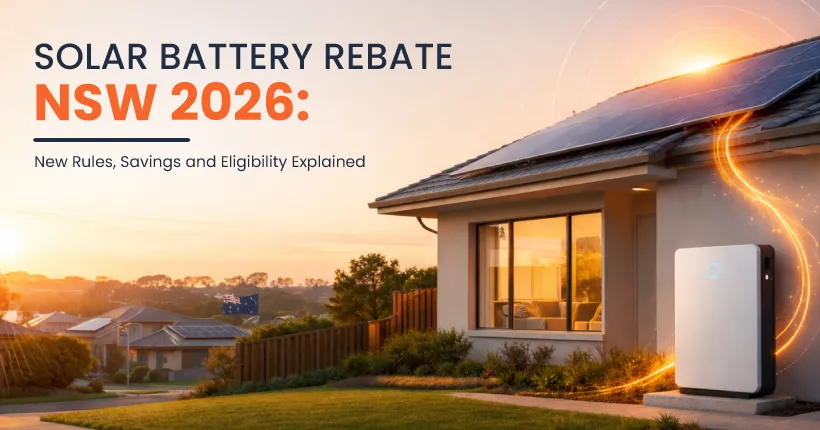
If you already have solar, you’ve probably noticed one thing lately exporting power just doesn’t pay like it used to.
Feed-in tariffs across NSW have dropped to a few cents per kWh, while evening peak rates keep climbing. That gap is exactly why more homeowners are now looking at batteries.
And in 2026, the solar battery rebate NSW is one of the biggest reasons this shift is happening.
If you’re researching batteries, comparing quotes, or just trying to understand the numbers, this guide breaks it down clearly what’s changed, how much you can save, and whether you’re eligible.
The solar battery rebate NSW is part of the state’s push to help households store more of their own solar energy instead of exporting it cheaply to the grid.
In simple terms, it reduces the upfront cost of installing a home battery.
The current scheme is delivered through the NSW Government’s energy programs, often linked to:
This is what many people refer to as the nsw government solar battery rebate.
Let’s keep this practical.
The NSW battery rebate 2026 doesn’t usually come as a simple flat cash payment. Instead, it’s often applied as a discount through approved installers and programs.
This means a 13kWh battery may attract a higher incentive than a smaller 5kWh system.
The key takeaway: the solar battery rebate NSW doesn’t cover everything, but it can make a noticeable dent in upfront cost.

For federal government solar battery rebate NSW, eligibility is fairly straightforward, but there are a few conditions.
Most homeowners qualify if they:
In most cases, the system must:
You don’t need to overthink it if you’re a homeowner with solar, there’s a good chance you’re eligible for the nsw solar battery rebate in some form.
Not every battery qualifies.
If you’re comparing quotes, make sure the battery is eligible under the solar battery rebate NSW your installer should confirm this upfront.
This is where people get confused.
The nsw government solar battery rebate is usually not something you apply for directly.
Instead:
In some cases, you may need to:
It’s not complicated but it’s important to understand you’re getting a discounted system, not a cheque later.
This is a common question.
Right now, there’s no direct federal government nsw solar battery rebate equivalent to the STC rebate for solar panels.
However:
So your total system cost may include:
Together, these can significantly reduce the total investment.
Short answer: for many solar owners, yes.
Here’s why.
You might be exporting power for:
Then buying it back at:
A battery flips that equation.
Most homes use the most power:
A battery reduces that reliance.
More homeowners now care about:
The solar battery rebate NSW helps make that possible at a lower upfront cost.
If you’re already researching batteries, you’re at the right stage.
Before making a decision:
The reality is simple.
The nsw government solar battery rebate makes batteries more accessible in 2026 but the real value comes from choosing the right system for your home.
The nsw solar battery rebate isn’t just about saving money upfront.
It’s about:
For many NSW homeowners, 2026 is the tipping point where batteries finally make practical sense.
If you’re unsure about eligibility or want to understand how much you could save, the best next step is to get your system and usage reviewed.
A quick check can tell you:
The solar battery rebate NSW in 2026 is a government-supported incentive designed to reduce the upfront cost of installing a home battery system. It encourages households to store more solar energy instead of exporting it to the grid at low feed-in tariffs.
Most homeowners in NSW may qualify if they:
In most cases, homeowners do not need to apply directly. The approved installer usually includes the rebate in the quote and manages the paperwork, so the discount is applied upfront to the battery system price.
Approved systems typically include lithium-ion battery storage from recognised manufacturers such as Tesla, Sungrow, BYD, and Alpha ESS, provided they meet Clean Energy Council (CEC) standards.
Currently, there is no direct federal rebate specifically for batteries like the solar panel STC incentive. However, solar panels still receive federal rebates, which can help reduce the overall cost when installing solar and battery systems together.
For many homeowners, installing a solar battery in NSW can be worthwhile because feed-in tariffs have decreased while evening electricity rates continue to rise. A battery allows households to store excess solar energy and use it during peak periods, reducing reliance on the grid.
Copyright © 2026 SUNCRAFT SOLAR | ABN : 38 689 488 266 | Licence Number : NSW : 486169C | SA: BLD 356274

