

Copyright © 2026 SUNCRAFT SOLAR | ABN : 38 689 488 266 | Licence Number : NSW : 486169C | SA: BLD 356274


|
Point |
Detail |
|
What is a FIT? |
A credit your electricity retailer pays you for excess solar energy exported to the grid. |
|
How it works |
Solar powers your home first → unused energy exports to grid → retailer credits your bill. |
|
Current model |
Most Australians receive an export tariff (paid only for surplus), not a generation tariff. |
|
Key factors |
Retailer, state/territory, electricity plan, system size, and household usage patterns. |
|
Rates trend |
FIT rates have declined as solar adoption increased; batteries are becoming more attractive. |
|
Legacy schemes |
Some homeowners still receive premium government-backed FITs — check before switching retailers. |
|
Best strategy |
Compare retailer rates regularly; consider battery storage to maximize self-consumption. |
If you have solar panels, you may be eligible to receive a feed-in tariff for solar. A feed-in tariff (FIT) is the payment your electricity retailer gives you for any excess solar energy your system exports back to the electricity grid.
While feed-in tariff rates vary between retailers and states, they remain an important way for Australian homeowners to offset their electricity costs. In this, you will find all the answers to your questions along with feed-in tariff explained.
A feed-in tariff for solar is a credit paid by your electricity retailer for surplus electricity your solar system generates but doesn’t use. It’s simple to understand how a feed-in tariff works.
Think of it this way:
Unlike the original Feed-in Tariff schemes introduced in some countries years ago, feed-in tariffs for solar in Australia are generally determined by electricity retailers, although some state governments regulate minimum rates or provide guidance.
The amount you receive depends on factors such as:
Understanding solar feed-in tariff Australia arrangements helps homeowners compare electricity plans and maximise the value of their solar investment.
Many homeowners assume all feed-in tariffs work the same way, but there are two different models.
|
Generation Tariff |
Export Tariff |
|
Paid for every unit of electricity your system generates |
Paid only for electricity exported to the grid |
|
Common under older government FIT schemes |
Used across Australia today |
|
Doesn’t depend on household usage |
Depends on how much surplus electricity you export |
|
Less common today |
Current standard for most Australian solar customers |
For Australian households, the export tariff is the one you’ll most likely receive.

Most Australian homeowners and businesses can access feed-in tariffs for solar, provided they meet the requirements of their electricity distributor and retailer.
Eligibility generally includes:
Other renewable technologies such as wind, hydro, and anaerobic digestion may also qualify in some circumstances, although solar remains the most common.
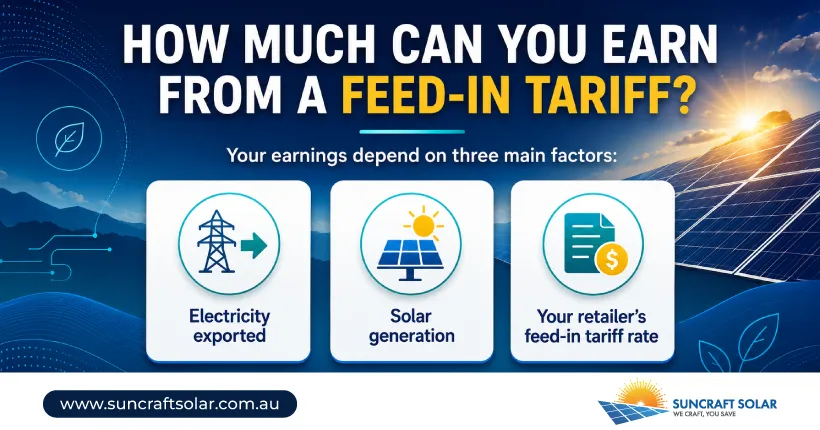
Your earnings depend on three main factors:
Homes that consume most of their electricity during the day generally export less energy than households that are empty during working hours.
If you’re looking to compare solar feed-in tariff offers, reviewing retailer rates alongside your usage habits is often more valuable than simply choosing the highest advertised rate.
A feed-in tariff rewards households for generating renewable electricity and exporting surplus power to the grid. It helps reduce the overall cost of owning solar panels while supporting Australia’s transition towards cleaner energy.
Feed-in tariffs also encourage homeowners, farms, and small businesses to invest in renewable energy systems that contribute to local electricity supply.
Feed-in tariff rates have gradually reduced as solar adoption has increased across Australia. Many households now find that using their own solar energy or storing it in a battery delivers greater savings than exporting it.
Rates also differ between retailers, meaning homeowners should regularly review their electricity plan to ensure they remain competitive.
Yes, feed-in tariffs in Australia are still available, but they operate differently from the generous government-backed schemes introduced years ago.
Today, most Australian solar customers receive retailer-managed export tariffs, where electricity retailers determine the payment offered for exported electricity within applicable state regulations.
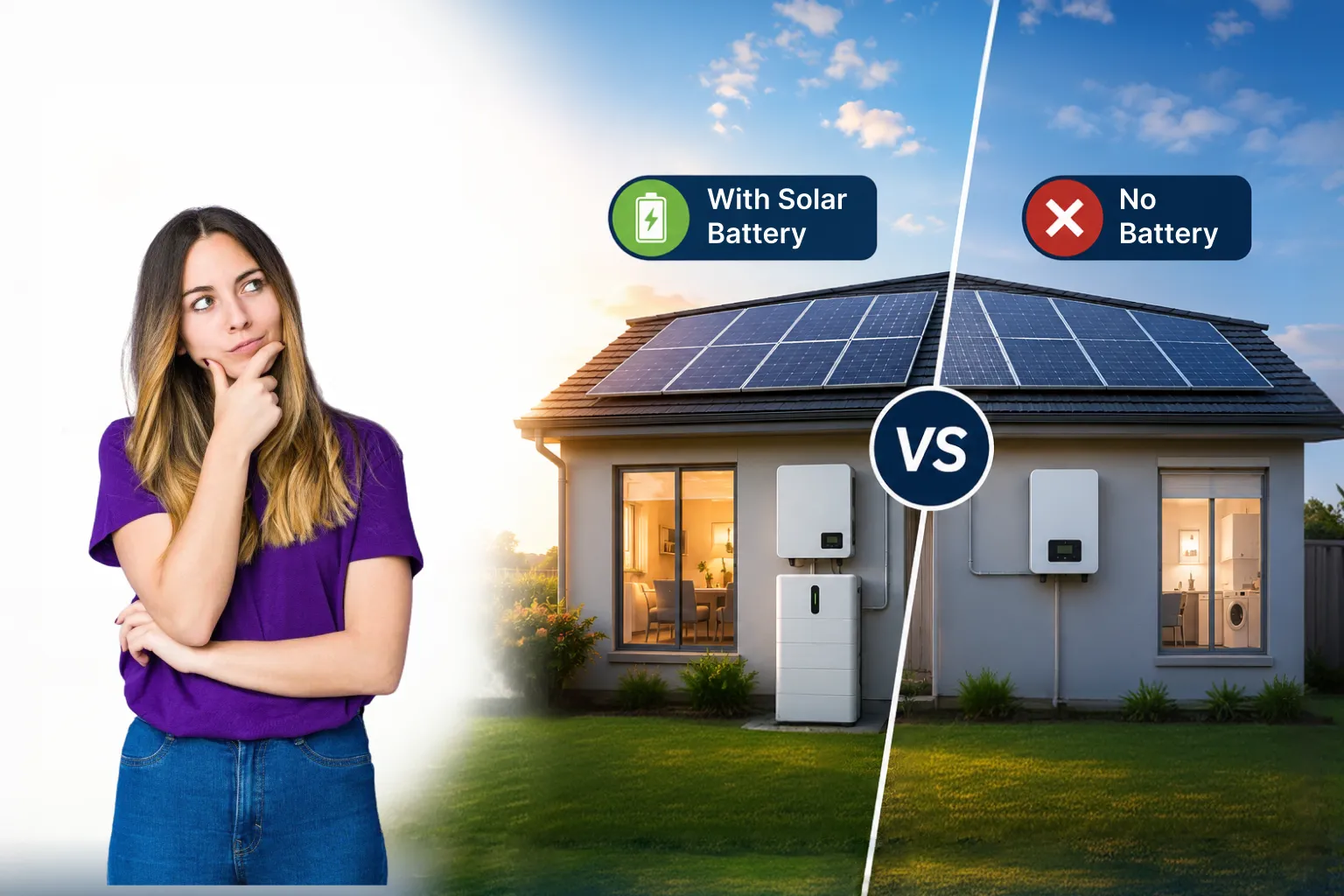
Because feed-in tariff rates have declined, many homeowners are now pairing solar with battery storage. Instead of exporting excess electricity for a relatively low payment, batteries allow households to store that energy and use it during the evening when electricity prices are typically higher.
If you already receive a legacy premium feed-in tariff, it’s important to understand the terms of your agreement before changing electricity retailers or modifying your solar system.
|
Scenario |
Without Battery |
With Battery |
|
Daytime solar |
Powers home + exports excess |
Powers home + charges battery |
|
Evening/night |
Buy expensive grid electricity |
Use stored solar energy |
|
FIT earnings |
Lower rate per kWh exported |
Higher savings by avoiding peak rates |
|
Blackout protection |
No backup power |
Backup power available |
|
Long-term savings |
Dependent on FIT rates |
More control over energy costs |
As FIT rates continue to fall, batteries are shifting from a “nice-to-have” to a financially smart addition for many Australian households.
A solar feed-in tariff (FIT) is a credit paid by your electricity retailer for any excess solar energy your system generates but doesn't use. The unused electricity is exported to the grid, and your retailer pays you a set rate per kilowatt-hour (kWh) for that exported power, which appears as a credit on your electricity bill.
Feed-in tariff rates in Australia vary by state, retailer, and electricity plan. As of 2026, typical export tariffs range from approximately 4 to 12 cents per kWh, with some premium legacy schemes paying significantly more. State governments may set minimum rates, but most retailers offer competitive rates above the minimum.
A generation tariff pays you for every unit of electricity your solar system produces, regardless of whether you use it or export it. An export tariff only pays you for the surplus electricity you send back to the grid. Today, nearly all Australian solar customers receive an export tariff.
Most Australian homeowners and businesses with a grid-connected solar system, an approved inverter, accredited installation, and a suitable export meter are eligible. Eligibility requirements can vary by state and electricity distributor.
Yes, feed-in tariffs still provide value by offsetting your electricity costs. However, rates have declined significantly compared to early government schemes. For many households, maximizing self-consumption (using your own solar power) or adding a battery storage system now delivers greater long-term savings than relying on export credits alone.
Premium feed-in tariffs were part of early government incentive schemes and are generally no longer available to new applicants. However, if you are already enrolled in a legacy premium scheme, you may continue receiving it — but changing retailers or modifying your system could disqualify you.
If your feed-in tariff rate is low (under 5–6 cents/kWh) and you use most of your electricity in the evening, a solar battery can deliver better savings by storing excess daytime solar for later use. Batteries also provide backup power during blackouts. However, they require a significant upfront investment.
Copyright © 2026 SUNCRAFT SOLAR | ABN : 38 689 488 266 | Licence Number : NSW : 486169C | SA: BLD 356274

