

Copyright © 2026 SUNCRAFT SOLAR | ABN : 38 689 488 266 | Licence Number : NSW : 486169C | SA: BLD 356274


If you're planning a battery installation in 2026, timing now matters more than most homeowners realise. From 1st May 2026, Australia’s federal solar battery rebate began reducing under the new declining incentive structure.
The rebate value dropped from around $300 per kWh to roughly $244 per kWh, changing the real cost of battery systems across the country. For homeowners comparing quotes, this shift can mean thousands of dollars’ difference depending on battery size.
And because batteries are already a major investment, understanding these changes before signing anything is critical.
In this guide, we’ll explain:
The federal solar battery allowance moved to a stepped reduction model from 1st May 2026.
Instead of keeping a fixed rebate value, the incentive now gradually reduces over time.
This affects:
For many homeowners, the updated solar battery rebate now makes system sizing more important than ever.
This solar battery rebate nsw 2026 reduction which is explain in cer.gov.au wasn’t random. The government introduced the declining structure because battery adoption across Australia has accelerated rapidly.
Key reasons include:
The idea is similar to how solar panel rebates reduced gradually over previous years.
Even after the reduction, the solar battery rebate still plays a major role in improving battery affordability for Australian households.
The impact varies slightly between states.
NSW Impact
The solar battery refund NSW 2026 landscape still remains relatively attractive because many homeowners may combine:
Some NSW battery programs still provide:
This softens the impact of the lower federal rebate.
QLD Impact
Queensland homeowners are still in a strong position because:
However, larger systems now require more careful ROI planning due to the reduced rebate value.
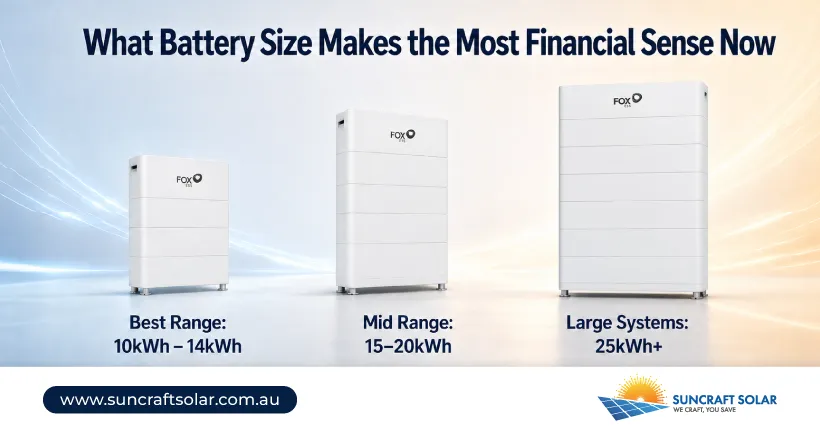
The new rebate structure changes the economics of oversizing.
For most Australian homes, this range now offers the strongest balance between:
This is often the ideal solar battery size for home setups with existing 6.6kW or 10kW solar systems.
Better suited for:
Still viable, but payback periods may stretch longer.
These systems now require careful planning due to:
They’re usually best for:
Focus on:
The right solar battery size for home depends mainly on:
Larger batteries lost more rebate value after May 2026.
This means oversizing now has bigger financial consequences.
Battery pricing varies significantly between installers and brands.
At SunCraft Solar, we help homeowners compare:
Without overcomplicating the process.

The updated solar battery refund structure has changed battery economics in Australia. But batteries still make strong financial sense for many homes, especially those with:
The key in 2026 is choosing the right system size and understanding how the rebate reduction affects your real payback. Because after May 2026, smart sizing matters more than ever.
Copyright © 2026 SUNCRAFT SOLAR | ABN : 38 689 488 266 | Licence Number : NSW : 486169C | SA: BLD 356274

