
Copyright © 2026 SUNCRAFT SOLAR | ABN : 38 689 488 266 | Licence Number : NSW : 486169C | SA: BLD 356274

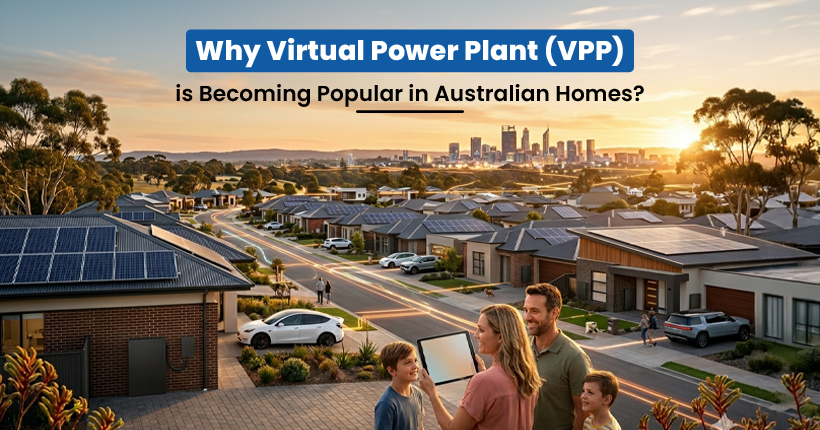
Across Australia, solar adoption is already high. But now, something new is gaining attention the virtual power plant Australia model. model.
With rising electricity prices, low feed-in tariffs, and growing interest in battery storage, many homeowners are being introduced to VPP programs as the “next step” after solar.
You may have already seen offers mentioning:
But what does it actually mean for your home?
Let’s break down how virtual power-plant Australia works, why energy companies are pushing it, and whether it’s worth considering.
A virtual power-plant Australia is a network of home solar batteries connected together and managed by an energy provider.
Instead of each home using its battery independently, all connected systems work together like one large power station.
In simple terms:
That’s the basic idea behind VPP in australia turning individual homes into part of a larger energy system.
Energy providers are actively promoting virtual power plant Australia programs for one key reason grid stability.
During peak demand:
Instead of building new infrastructure, energy companies use VPP systems to:
This is why many providers are offering incentives like:
The virtual power plant VPP program helps energy companies manage demand while offering homeowners some financial return.
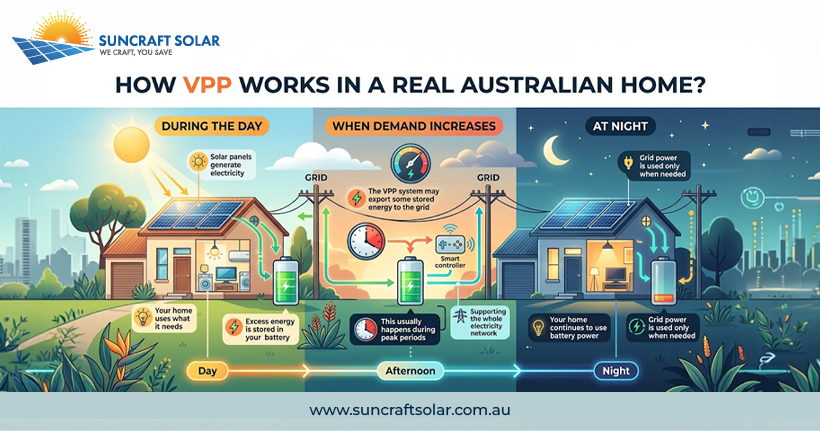
Here’s how a typical solar battery VPP australia setup works in everyday life:
That’s how VPP integrates your home into a broader energy network.
Interest in virtual power plant Australia programs is growing for a few practical reasons.
Homeowners are looking for:
Many VPP programs offer:
For some households, especially those already considering batteries, a solar battery VPP australia setup can make the numbers more appealing.
Yes, and quite significantly.
Traditionally, batteries were used for:
Now, with virtual power plant Australia, batteries are also being used as:
This shift means your battery is no longer just for your home.
It becomes part of a larger system which is the core idea behind VPP in australia.
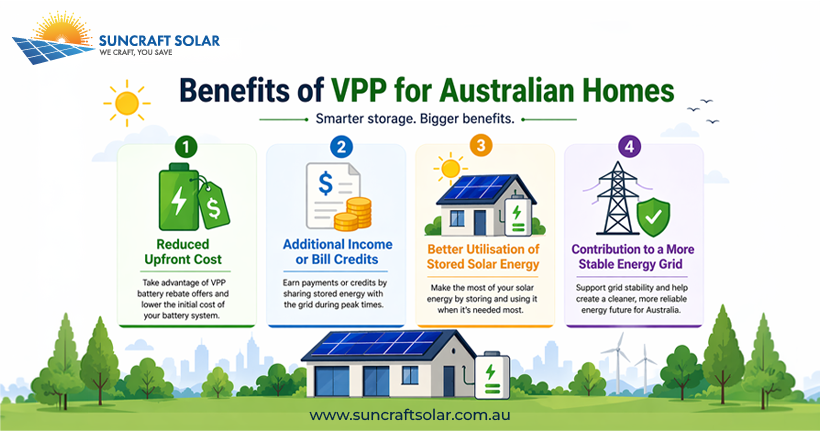
There are clear VPP benefits, especially for homeowners already considering battery storage.
For some households, the financial benefits can improve the overall return on a solar battery system.
While interest is growing, many homeowners still have valid concerns.
These concerns are important.
Not every virtual power plant Australia program is the same, and conditions can vary between providers.
Short answer: No.
A battery works perfectly well without joining a VPP.
A solar battery VPP australia setup may suit you if:
But it may not be ideal if:
Choosing whether to join a virtual power plant VPP program depends on your priorities.

The rise of virtual power plant Australia programs reflects a bigger shift in how energy is used and managed.
For homeowners, it offers:
But it also comes with trade-offs around control and usage.
If you’re considering a battery, understanding VPP in australia is now essential not optional.
For some homeowners, a VPP can offer bill credits and lower upfront battery cost, but the value depends on how much control you’re willing to share.
You still use your battery normally, but the provider may access a portion of stored energy during peak demand.
Yes, most programs allow exit, but some may have contract terms or conditions you should check before joining.
In some cases, yes. If energy has been exported earlier, less backup may be available, depending on your system setup.
Returns vary by provider and usage, usually in the form of bill credits rather than direct cash payments.
Copyright © 2026 SUNCRAFT SOLAR | ABN : 38 689 488 266 | Licence Number : NSW : 486169C | SA: BLD 356274

