

Copyright © 2026 SUNCRAFT SOLAR | ABN : 38 689 488 266 | Licence Number : NSW : 486169C | SA: BLD 356274

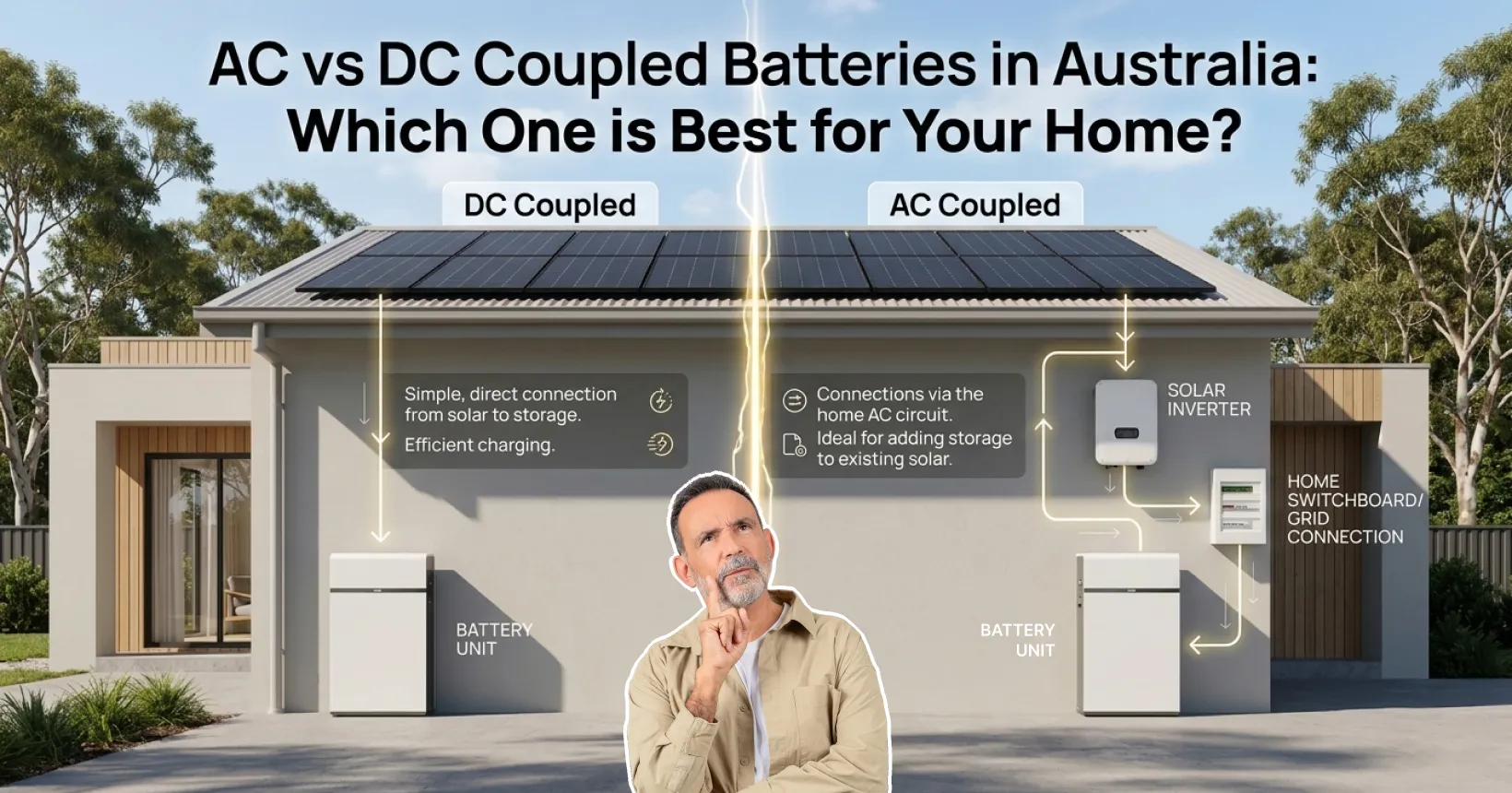
Trying to decide between ac vs dc coupled batteries in Australia? You’re not alone.
With rising electricity prices, lower feed-in tariffs, and more homeowners looking to store their solar energy, batteries are becoming the next logical step. But once you start researching, things get confusing fast.
AC, DC, hybrid; what does it actually mean?
This guide gives you a clear, no-jargon breakdown of ac and dc coupled batteries, so you can confidently choose the right setup for your home whether you already have solar or you’re planning a new system.
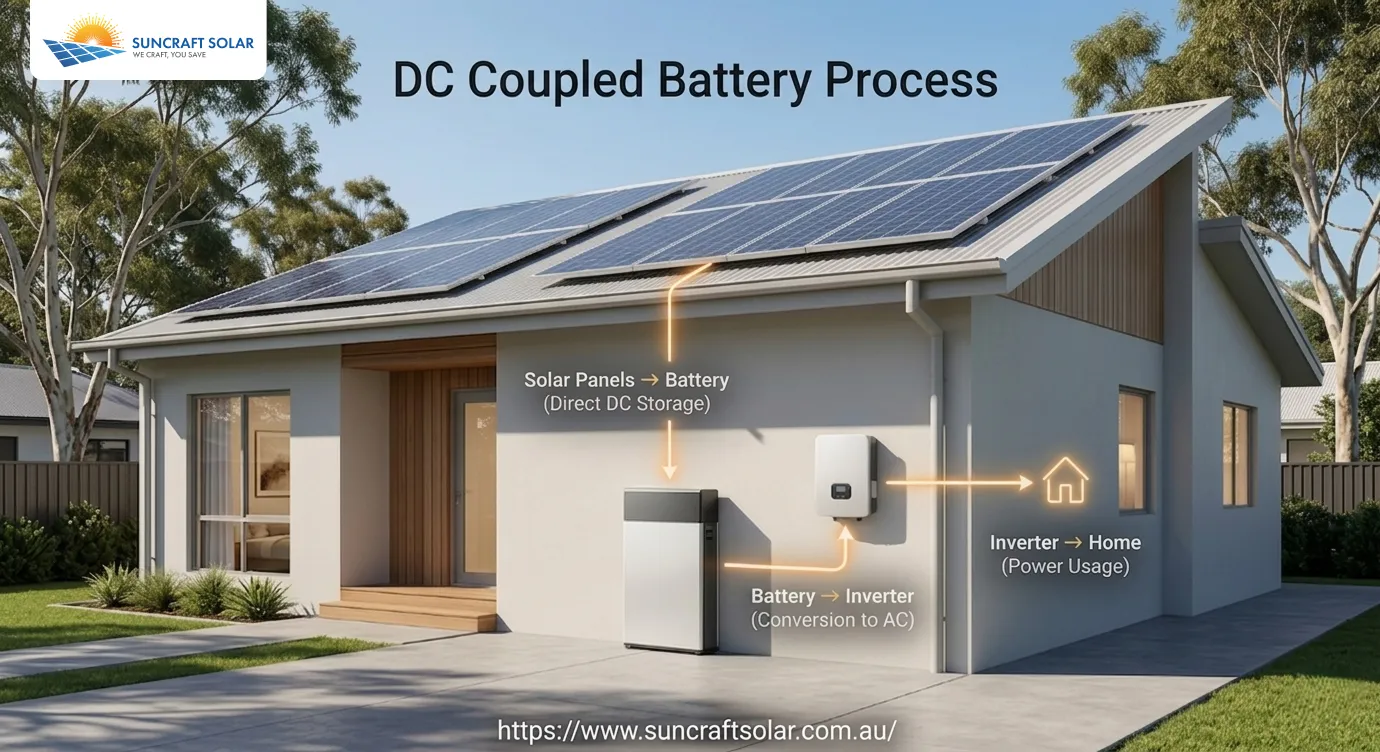
A dc coupled battery stores solar energy directly before it gets converted into usable electricity. In simple terms, your solar panels send energy straight into the battery, which reduces energy loss.
With dc coupled batteries, the energy flow is more direct:
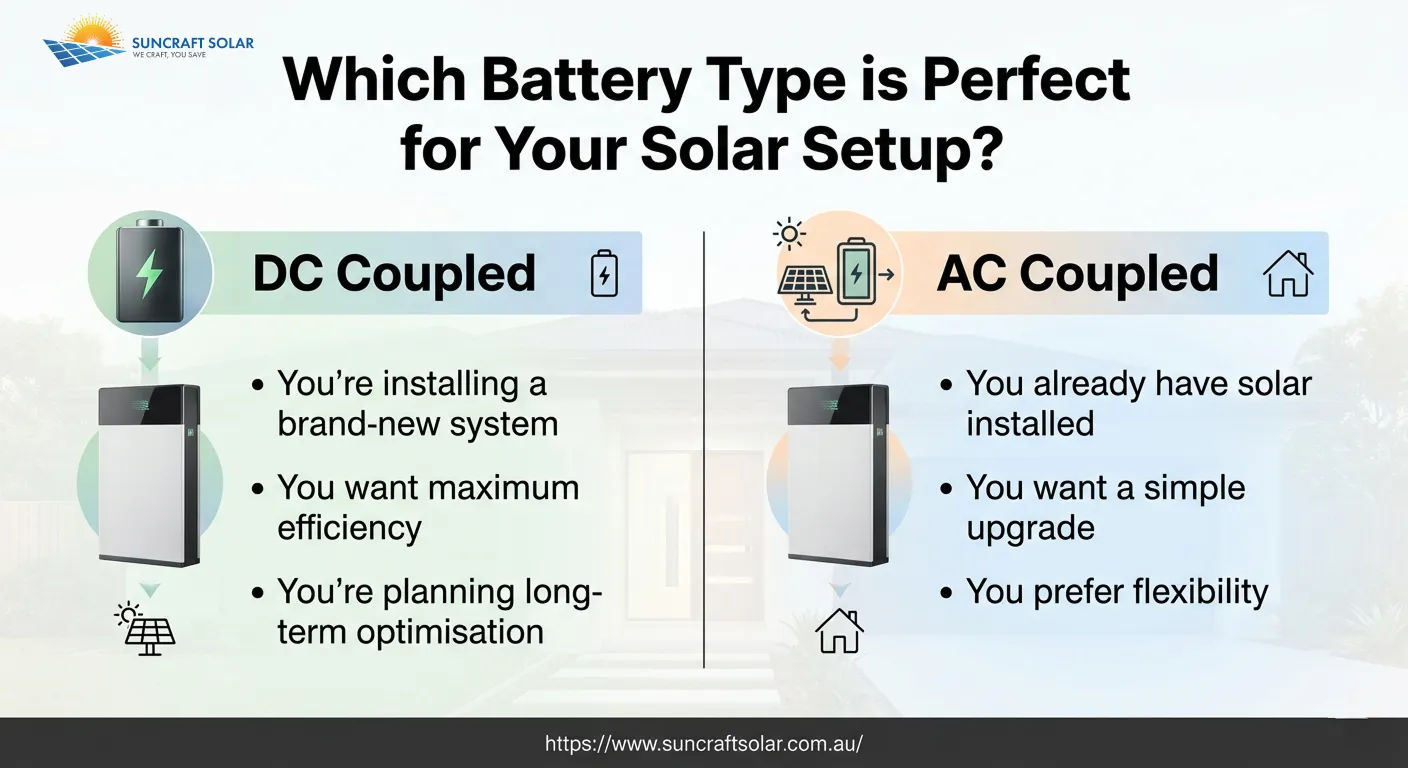
If you’re installing a brand-new system, dc coupled batteries are often the more efficient option.
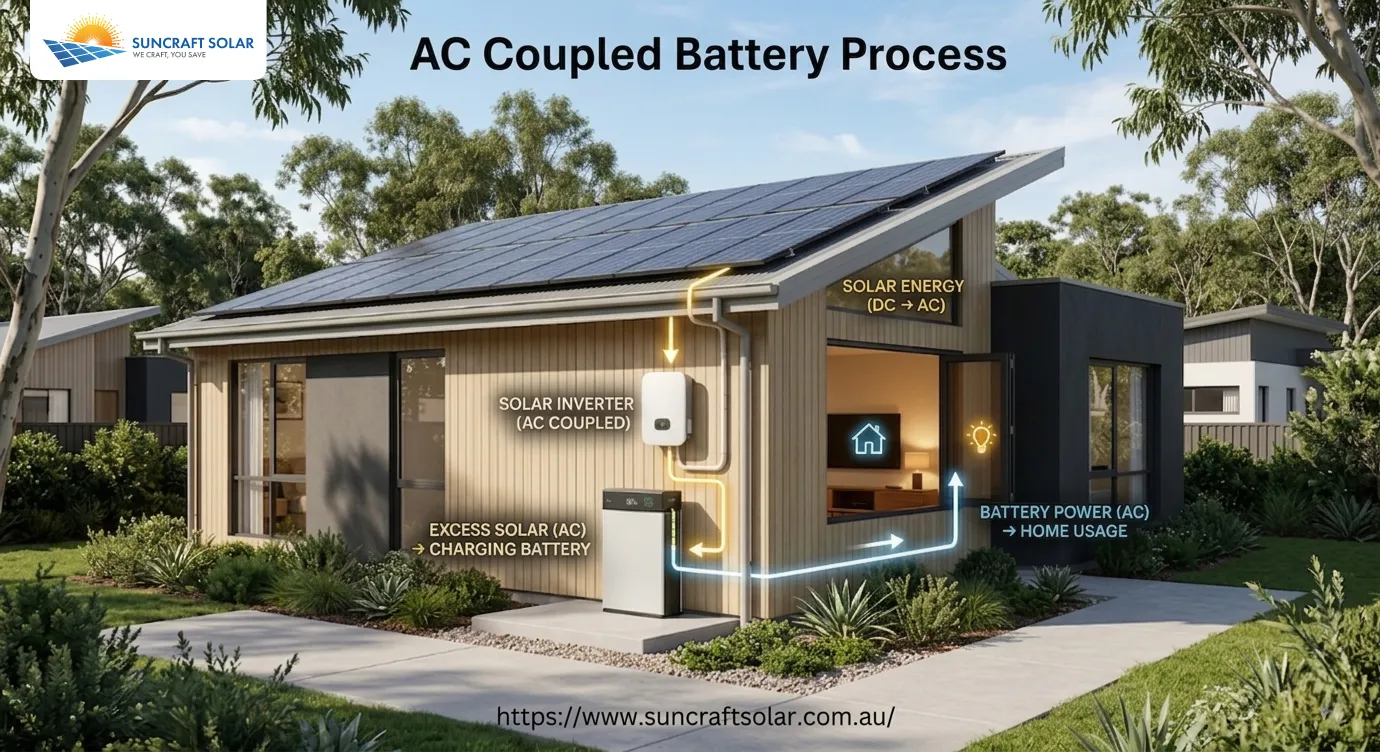
An ac coupled battery stores energy after it has already been converted into usable electricity. That means your solar system powers your home first, and any excess is converted again before being stored.
The flow looks like this:
AC coupled batteries are especially popular in Australia for homeowners who already have solar and want to add a battery without changing their system.
Let’s make this really easy.
This is your ac vs dc simple explanation:
Think of it like this:
Here’s a quick comparison:
|
Feature |
DC Coupled |
AC Coupled |
|
Efficiency |
Higher |
Slightly lower |
|
Best for |
New solar systems |
Existing solar systems |
|
Installation |
More complex |
Easier upgrade |
|
Energy loss |
Lower |
Slightly higher |
This is the core of ac vs dc coupled batteries direct vs indirect energy flow.
The difference between AC-coupled compared to DC-coupled solar comes down to how energy moves through your system.
The right choice depends less on theory and more on your situation.
This is where most homeowners get stuck.
So let’s simplify AC battery vs DC battery with real-life scenarios.
Go with AC coupled batteries
Why:
Go with DC coupled batteries
Why:
When comparing ac to dc coupled batteries, neither is “better” universally. It depends on your setup.
Yes, you absolutely can.
In Australia, most homeowners adding a battery to an existing system choose ac coupled batteries.
Why?
This is one of the biggest advantages in the ac vs dc coupled batteries debate. AC systems are designed for upgrades.
If you already have solar, AC is usually the practical choice.
Most homeowners don’t need a complicated answer.
They just need the right fit.
Not sure which setup suits your home? Our experts at SunCraft Solar can help you choose the right system based on your current solar, usage, and future plans.
When comparing ac vs dc coupled batteries, most homeowners eventually ask the same question: which one actually saves more money?
In real-world Australian conditions, the difference in efficiency between ac coupled batteries and dc coupled batteries is usually around 5–10%. DC systems waste less energy because there’s only one conversion step, while AC systems convert energy twice. On paper, that makes DC look better.
But here’s the practical reality.
If you already have solar, the extra cost and complexity of switching to a DC system often outweighs those efficiency gains. In that case, an AC system still delivers strong savings by reducing your evening peak usage and increasing self-consumption.
Where DC systems shine is in new installations. Since everything is designed together from the start, you get better overall performance and slightly higher long-term savings.
So when thinking about ac and dc coupled batteries, don’t focus only on efficiency. Look at the full picture your existing setup, installation cost, and how you actually use power at home.

When it comes to ac vs dc coupled batteries, the decision is actually quite straightforward once you understand the basics.
There’s no one-size-fits-all answer.
It depends on:
If you’re still unsure, getting the right advice upfront can save you time and money.
Not sure whether AC or DC is right for your home?
Our team at SunCraft Solar can review your setup
and recommend the best solution based on your usage, system, and future plans.
AC coupled batteries store energy after it’s converted to usable electricity, while DC coupled batteries store energy directly from solar panels. This makes DC systems slightly more efficient.
It depends on your setup. DC coupled batteries are better for new solar systems, while AC coupled batteries are ideal if you already have solar installed.
Yes, you can. Most homeowners in Australia choose AC coupled batteries because they are easier to add without changing the existing system.
Yes, DC coupled batteries are generally more efficient because they involve fewer energy conversions, resulting in less energy loss.
For existing solar systems, yes. AC coupled batteries are usually more cost-effective because they don’t require replacing your current inverter.
Yes, DC coupled systems typically require a hybrid inverter to manage both solar generation and battery storage efficiently.
For many homeowners, yes. A solar battery can help reduce electricity bills, increase energy independence, and make better use of your solar power.
Copyright © 2026 SUNCRAFT SOLAR | ABN : 38 689 488 266 | Licence Number : NSW : 486169C | SA: BLD 356274

